

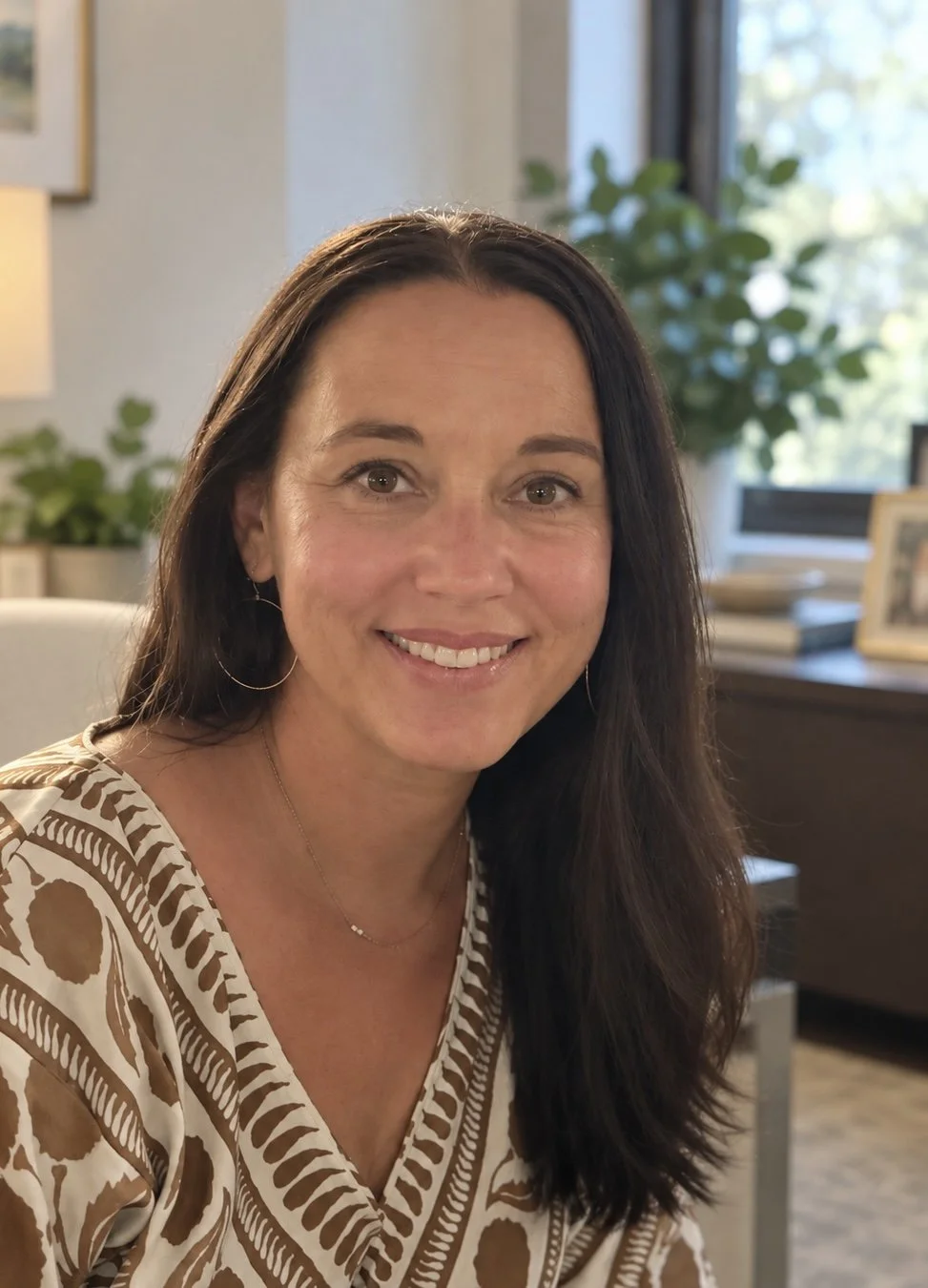
About Dr. Sally Lambeth, MD
Education & Training
University of North Carolina at Chapel Hill
Undergraduate education
University of North Carolina School of Medicine
Doctor of Medicine
Vanderbilt University Medical Center
Residency in Internal Medicine
Board Certified in Internal Medicine
More than 20 years of clinical experience
Hospital and outpatient medicine
I am a proud Winston-Salem native. I attended Mount Tabor High School and UNC-Chapel Hill before graduating from the UNC School of Medicine. I completed my residency in Internal Medicine at Vanderbilt University Medical Center.
Medicine has always been part of my life
Medicine was part of my life long before I became a physician myself.
My father was a rheumatologist in Winston-Salem for about 40 years, the first 30 or so as a solo practitioner. His office was tiny, and he had one staff member who handled check-in, check-out, and billing. He was his own nurse. He took vitals and drew blood himself. I even remember him bringing patient gowns home to wash in our washer and dryer.
Every Sunday after church, our family would go to K&W on Healy Drive. My sisters and I came to expect that patients would stop by our table to hug my dad, talk to him, and gush over us.
I grew up quietly observing the relationships my father built with his patients and their families over decades. It wasn’t transactional medicine. Each patient was a relationship that mattered to him — and to them.
When my father retired several years ago, he held a small reception. Hundreds of patients came. They hugged him, thanked him, and tearfully told him what his care had meant to them over the years. That stuck with me.
The kind of physician I became
My own career has taken me through hospital medicine and outpatient primary care, caring for adults of all ages and with an enormous range of medical needs.
Over time, I've found that I particularly enjoy complex care and medical problem-solving: looking back through a patient's history, noticing patterns, figuring out how seemingly unrelated problems may fit together, and helping patients understand what all of it means.
But that's only part of what I love about being a physician.
One of my greatest joys is teaching and explaining things to my patients, especially seeing the light come on when someone says, “No one has ever explained that to me before.”
And the longer I practice, the more convinced I become that some of the most valuable things a primary care physician does are surprisingly difficult to measure.
Knowing that the symptom you're describing today is different from the one you had two years ago.
Remembering which medication you tried before and why you stopped it.
Noticing that three seemingly unrelated problems may actually be related.
Reading the consultant's note instead of simply telling you to “follow up with your specialist.”
Knowing when something doesn't quite add up.
Helping you figure out when something you've read online or asked ChatGPT about is onto something, and when it's barking up the wrong tree.
And knowing you, not just the list of diagnoses attached to your chart.
Sometimes good medicine means ordering the right test or prescribing the right medication. Sometimes it means looking at everything that's already been done and realizing we don't need another test at all.
And sometimes it means saying, “I don't know yet. Let me think about this.”
Then actually thinking about it. Doing some research, talking with your specialists when needed, and coming back to you with the best answer I can find so that we can decide together what comes next.
I want enough time to do that.
Sometimes patients just need someone to help
Not long ago, I was at Labcorp when I noticed an older couple struggling with the electronic check-in system. They were trying to figure out where to go, what to press, and what they were supposed to do next.
They were clearly confused. And there was no one at the front desk.
So I helped them.
It was a very small thing, but I kept thinking about it afterward.
Here were two older adults who had done exactly what they were supposed to do. Their doctor had ordered testing, they had gotten themselves to the lab, and they were trying to follow through with their medical care. But before they could even have their blood drawn, they had to successfully navigate another system.
Healthcare increasingly asks patients to coordinate appointments, portals, referrals, medications, test results, insurance requirements, and recommendations from multiple physicians.
And sometimes it seems that the more complicated your health becomes, the more the healthcare system asks you to manage it yourself.
That is one reason I have particularly enjoyed caring for older adults and people with complex medical needs. They often don't need another isolated recommendation added to the pile. They need a physician who knows their history, understands what their other physicians are doing, and can help them figure out how the pieces fit together.
But you don't have to be medically complicated to benefit from having a physician who knows you. Good primary care is also about prevention, catching changes early, helping you make thoughtful decisions, and building a relationship over time, before you need it.
Why Segno
For much of my career, I have thought about what I would want my own medical practice to look like. At different points in my career, I’ve returned to the idea, but the timing was never quite right.
The longer I practice, though, the clearer I’ve become about what I value most in primary care, and what I think is increasingly difficult to provide in a traditional healthcare system.
Time.
Time to listen to the whole story. Time to look back through old records and notice a pattern. Time to explain what a test actually means. Time to understand and explain what several different specialists are recommending, and help a patient decide what comes next.
Time to know your story, pay attention to the details, and make sense of the whole picture.
That's the kind of primary care I intend to practice.
A smaller practice gives me the opportunity to do that: to know my patients well, think carefully about their care, and be more available when they need me. To see a patient as a whole person with a whole story, not just a collection of organ systems, diagnoses, and billing codes. To put my time and energy toward caring for each patient well, rather than jumping through hoops and checking boxes to meet the priorities of insurance companies and healthcare administration.
All while still taking advantage of all the good things modern medicine has to offer.
That’s why I created Segno.
A little more about me
Winston-Salem is home. I grew up here, and came back after residency to raise my family. My husband is also a physician, and we have two amazing teenagers.
Outside of medicine, I love travel, music, and good food. I am a lifelong DIY-er (thanks, Dad), an avid reader, and am an enthusiastic collector of books of all kinds, despite having long since run out of places to put them. I love my friends, my church, and my community. When I’m home, I’m usually reading, working a jigsaw puzzle, playing the piano, researching a new idea, hanging out with my husband and kids, or tackling a project - usually while trying not to trip over our Havanese dog Theo, who is convinced whatever I’m doing should involve him.